
Office cleaning checklist: what should a contract cleaner cover?
What gets cleaned daily, weekly and monthly, what to ask a contract cleaner to put in writing, and how to check the work is being done.


Arron & John, the directors, personally manage every account.
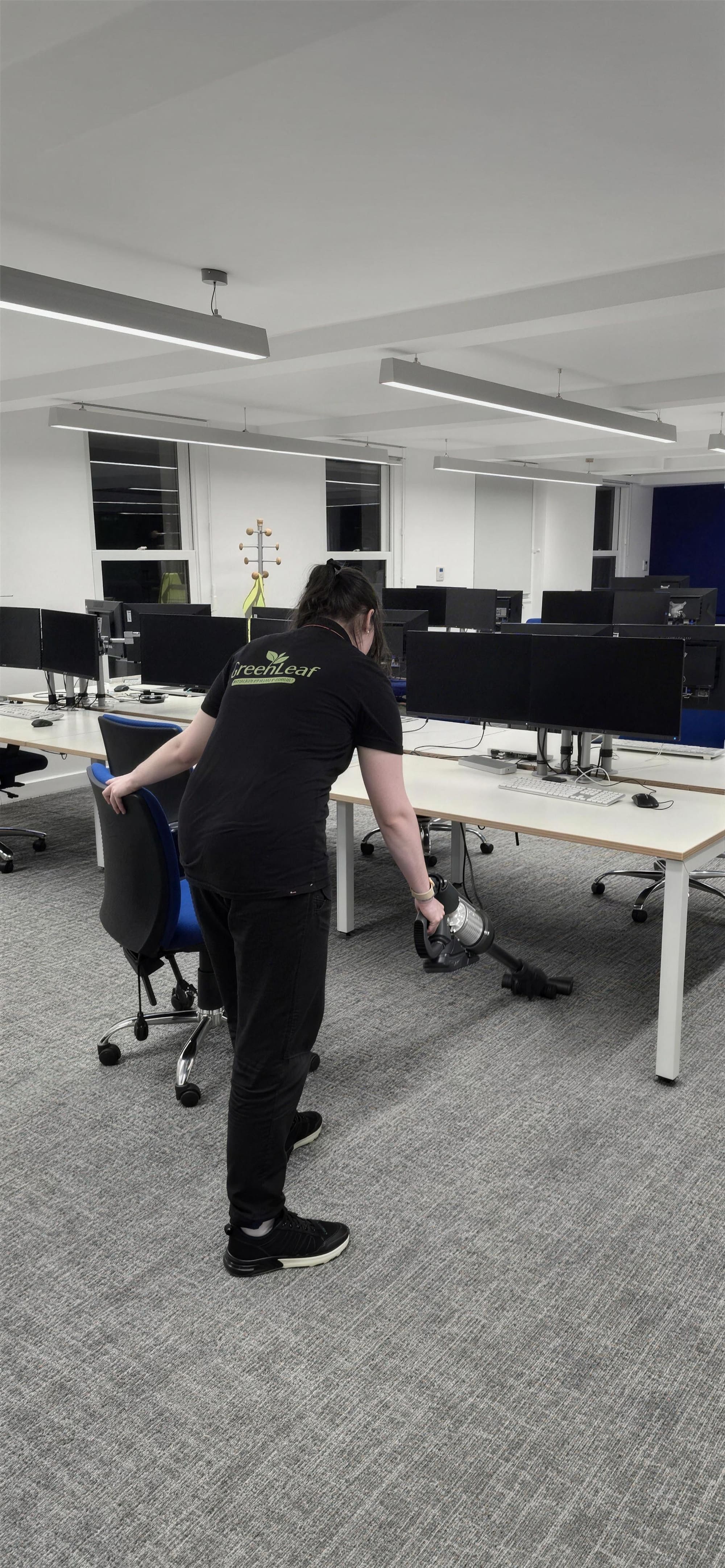
If you manage an office, the cleaning question is usually the same: what should be done, how often, and how will you know it has been? A written checklist answers all three, and it’s the quickest way to compare one contract cleaner with another. Here is a checklist you can adapt, then what to ask any cleaner to commit to. If you’d rather see how we work first, start with our office cleaning page.
What should be on an office cleaning checklist?
A good office cleaning checklist covers the places everyone touches, the floors, the kitchen and the toilets, and says how often each one is done. The detail depends on your office, but most checklists are built from the same few areas:
- Entrance and reception: floors, door handles, the reception desk and anything visitors touch.
- Open-plan and private offices: bins, floors, and any surfaces left clear enough to wipe.
- Meeting rooms: tables, chairs, door handles and bins.
- Kitchens and break-out areas: worktops, sinks, tables, the microwave and the fridge.
- Toilets and washrooms: toilets, sinks, mirrors, floors, and restocked soap and paper.
- Corridors, stairs and lifts: floors, handrails and lift buttons.
What’s done daily, weekly and monthly?
Daily tasks keep the office presentable and hygienic; weekly and monthly tasks deal with what builds up more slowly. This is a sensible starting point, not a rule. A small office may need less, and a busy one more.
Daily
- Empty bins and replace the liners
- Clean and restock toilets and washrooms
- Wipe kitchen worktops, sinks and break-out tables
- Vacuum or mop entrances, corridors and other busy floors
- Wipe door handles, light switches and lift buttons
- Tidy and wipe the reception area
Weekly
- Vacuum or mop every floor, not only the busy ones
- Dust surfaces, shelves and the tops of cabinets within easy reach
- Clean the inside of the microwave and wipe down the fridge
- Wipe skirting boards, door frames and marks on walls
- Clean meeting room tables and chairs thoroughly
Monthly
- Dust high ledges, vents and light fittings
- Vacuum and clean behind and under furniture
- Clean the insides of bins
- Descale taps and sinks
- Check the areas that get missed: behind doors, under radiators, the corners of stairs
What should a contract cleaner put in writing?
Anything you would otherwise have to remember to ask for. Whoever you choose, ask for the following in writing before you sign:
- The tasks and how often. Your checklist above, agreed line by line, so nobody assumes.
- The visit days and times, and how long each visit lasts.
- What they bring. Which equipment and products they supply, and whether items such as hand soap and toilet rolls are included or ordered separately.
- Who manages the contract. One named person you can call, and how quickly problems are put right.
- How the work is reviewed. Whether there is a regular catch-up, and who attends.
- The term and the notice period. How long you are tied in, and how you leave if it isn’t working.
- Keys and access. Who holds keys and alarm codes, and what happens if you change them.
- Insurance. Ask to see the certificate rather than take it on trust.
At GreenLeaf, we tailor each office clean to the office, and our two directors, Arron and John, personally manage every account. So the person you go through the list with is the person running your contract. We have 15 years of experience in commercial cleaning, and we use eco-friendly cleaning products and equipment. The areas we clean in offices include floors, communal break-out areas, staff kitchens and toilets, lobbies and foyers, and conference and meeting rooms.
How do you know the cleaning is being done?
Check it yourself, regularly, against the checklist. You shouldn’t need to take anyone’s word for it, and a good cleaner won’t mind being checked. A few habits make it easy:
- Walk the office after a visit. Look at the kitchen, the toilets and a couple of floors. It takes five minutes.
- Keep the checklist where you can see it. If a task is missed, point to the line, not to a general impression.
- Report problems straight away. Tell your named contact what you found, and ask for it to be put right and what will change.
- Hold a short review now and again. Ask what is working, and update the checklist when your office changes, such as a new desk layout or a bigger team.
A cleaner who agrees a clear checklist, tells you who to call and welcomes the check is usually one you can work with.
Talk to us about your office
If you’re comparing cleaners, or your current contract is coming to an end, send us your checklist and tell us about your office. See our office cleaning page, our wider commercial cleaning service for other business premises, or get in touch.
If you also run a hotel, our guide to what to check before you outsource hotel housekeeping covers the same questions for that job.